See the skills your workforce has today
Career Bird connects every role to the skills it requires, then measures proficiency with employee and manager surveys.
There is no central skills inventory.
Skills live in résumés, learning records and managers’ heads. Without one view, it is hard to plan for the work ahead or to know where to invest.
“I’ve tried doing that… manually… using like Excel spreadsheets, and it’s just not scalable at all.”
Skills defined and measured for every role
Get a measured view of workforce skills in weeks, not months
Career Bird suggests. Your team customizes.






Leaders need a way to see what skills they have, what skills they’re losing, and how to upskill or redeploy people in real time.
 Ted EmersonVP, Head of People
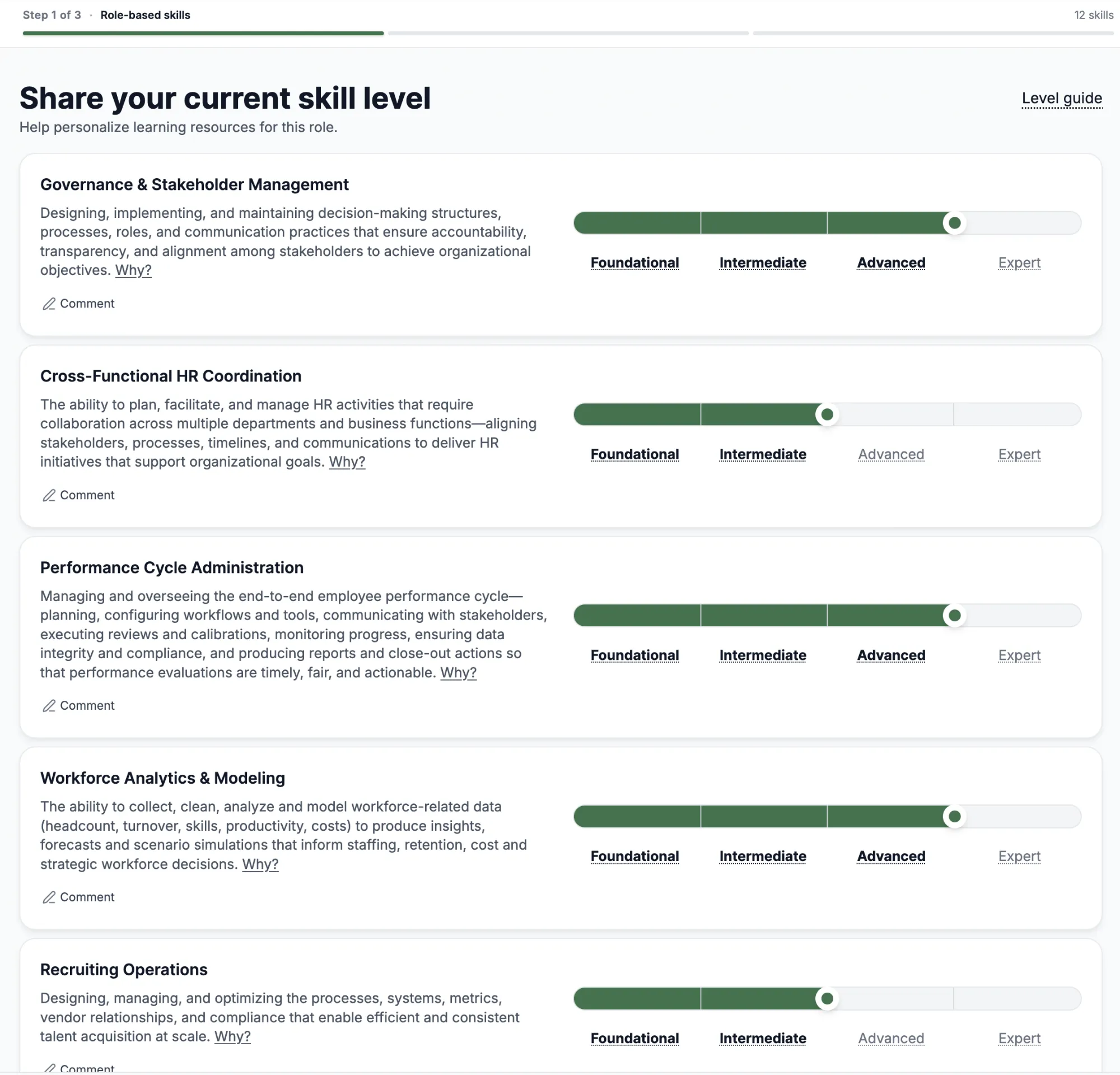
Proficiency measured against the role
- Each survey is personalized to the skills the employee’s role requires.
- Employees self-assess and managers calibrate.
- Proficiency levels are defined for every skill, so ratings mean the same thing across teams.
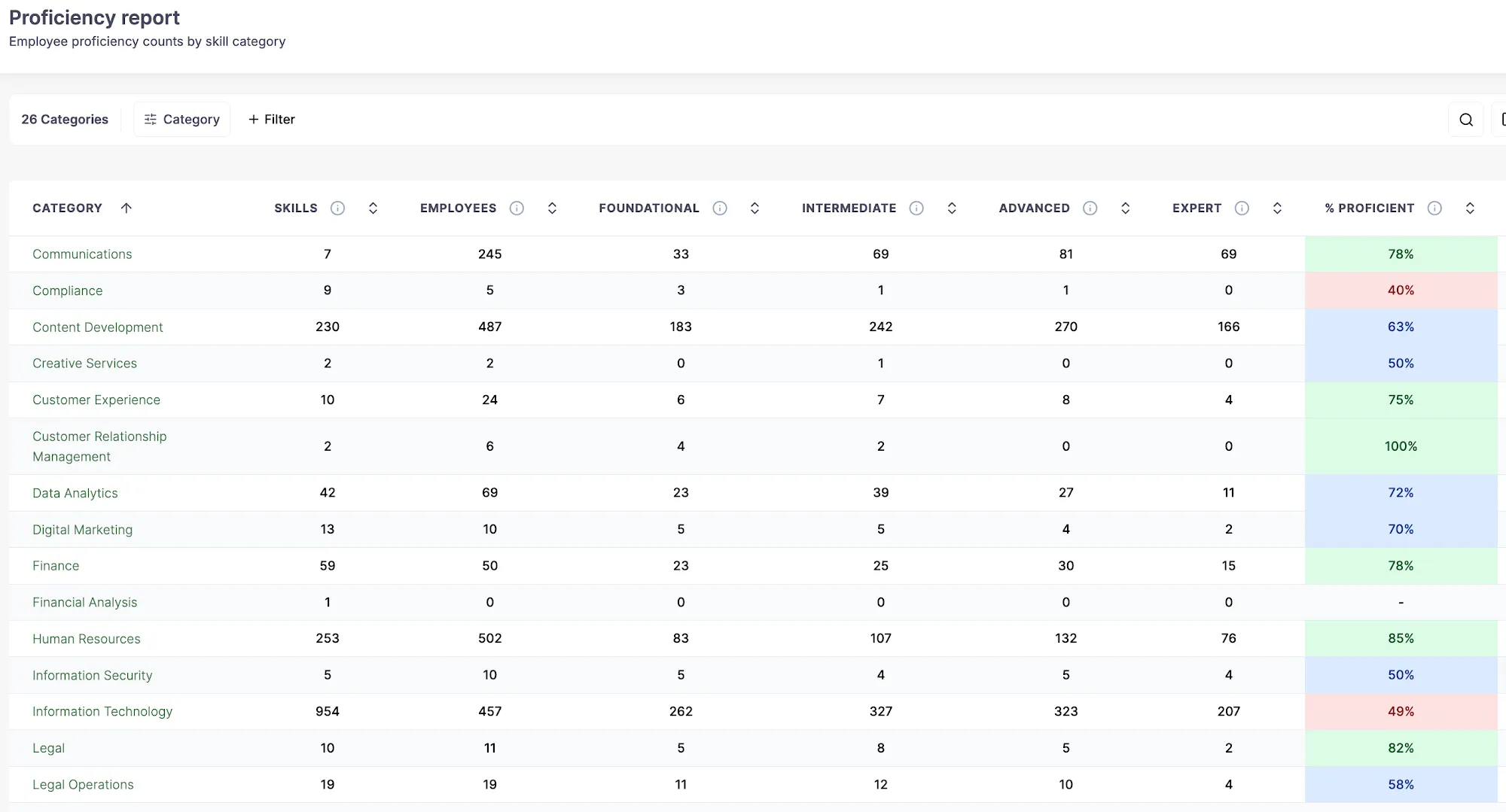
Strengths and gaps across the organization
- See proficiency by department, job family, role and skill category.
- Spot emerging skills before they become urgent.
- Bring the data to workforce planning and learning budget decisions.
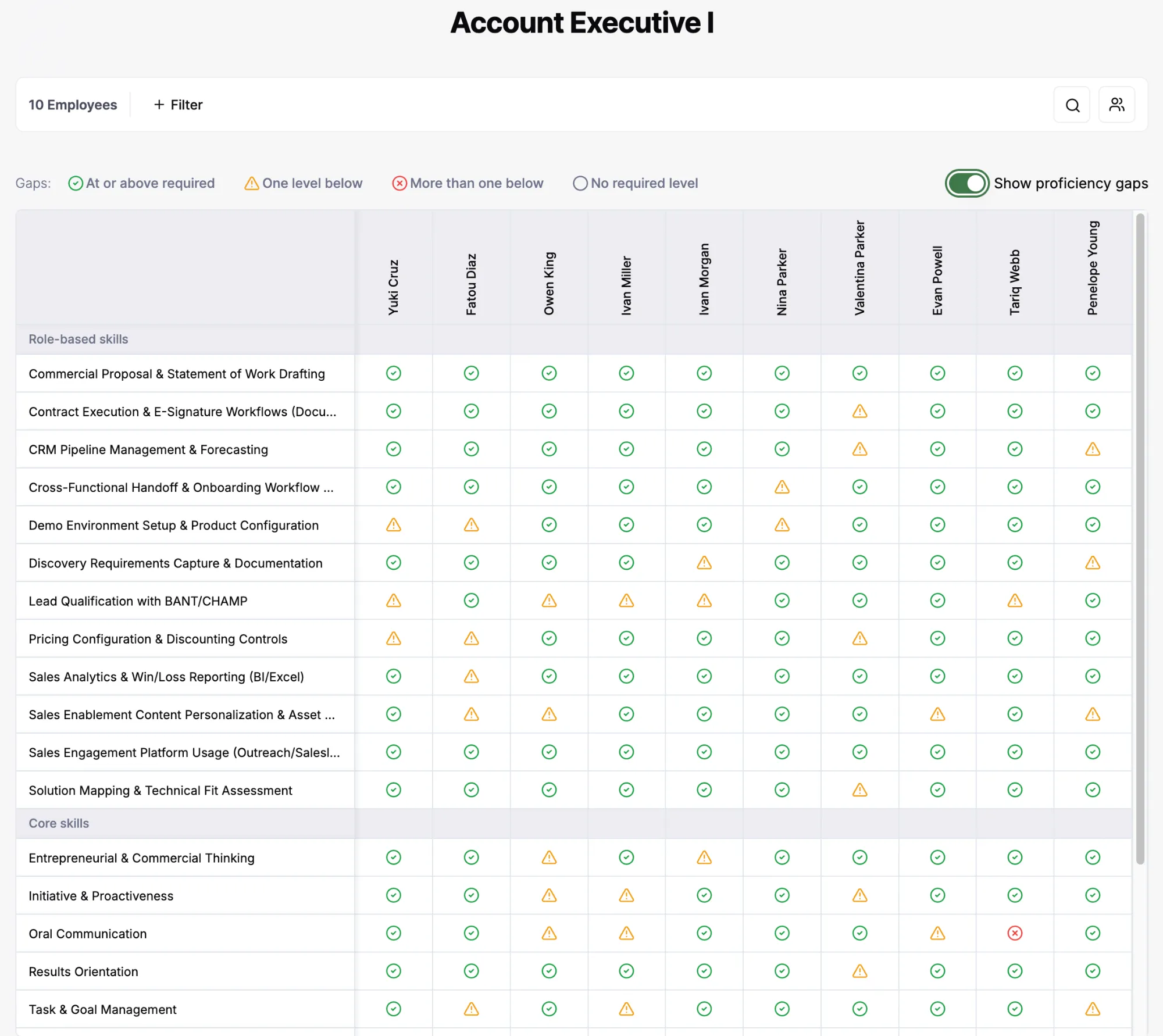
Gaps at the level of a single role
- Compare required and current proficiency for every person in a role.
- Turn gaps into development plans in a few clicks.
- Re-survey to see what moved.
How each team across HR benefits
“I’ve followed Career Bird’s evolution from the start, and it’s clear this platform was built by people who truly understand how organizations and talent grow. What stands out most is how Career Bird makes skills the common language across job design, learning, and mobility.”
 Don CarterEVP of People & Culture, Kiva
“What impressed me most is the depth. It’s not just a checklist of features — there’s a real understanding of how organizations evolve, how skills shift, and how people learn and grow in their careers.”
 Heather VeldmanVP of Total Rewards, Go Health
“You can tell Career Bird wasn’t just thrown together by software engineers. It’s clear that IO psychologists and HR leaders played a significant role in developing it — the frameworks are thoughtful, practical, and grounded in science.”
 Kira MeinzerChief People Officer, Envoy Global
“Career Bird connects the dots between job design, skills, learning, and mobility. Instead of separate systems and spreadsheets, we now have a single platform that ties everything together.”
 Gail RodmanVP Talent Strategy & People Experience, Unite Us
“So many platforms claim to be skills-focused, but Career Bird is actually built that way. It treats skills as the foundation for job design, learning, and career paths. That matters right now because AI is rewriting roles faster than most companies can respond.”
Ted EmersonVP, Head of People“Career Bird is one of the few HR platforms that feels like it was built for the end-user. Teams won’t need a lengthy rollout or training — it’s intuitive, clear, and something managers and employees actually want to use.”
 Maureen CalabreseFormer Chief People Officer, Sprout Social and Modern Health
“Career Bird helps companies prepare for the future by turning skills data into human growth, organizational agility, and real impact.”
 Rishad TobaccowalaFormer Chief Strategist and Growth Officer, Publicis Groupe
“Career Bird was selected to participate in the competitive PeopleTech Partners Growth Program as they are building meaningful solutions for Talent and People Leaders aligned with what’s next in work.”
 Cara Brennan AllamanoFounding Partner, PeopleTech Partners
Fits the HR stack you already run
Career Bird pulls employee data from your HRIS and sends job descriptions to your ATS. Your HRIS stays the system of record for people; Career Bird for roles and skills.


 +150 more
Built for employee data
SOC 2 Type II audited, with a GDPR-aligned data processing agreement and role-based access for every user. Your data is never used to train AI models.
Questions buyers ask
What is skills intelligence?
Skills intelligence is a current view of the skills in your workforce, measured against the skills each role requires. Career Bird reports it by department, job family, role and skill category.
Do we need a skills taxonomy first?
No. Career Bird suggests skills for each role based on its job description, and your team customizes them and the system will create a skills taxonomy and ontology that you can customize.
How is proficiency measured?
Proficiency is measured with a short survey. Each employee rates themselves on the skills their role requires, against proficiency levels that are defined for each skill, and their manager then reviews and calibrates those ratings. Because every level has a written definition, two people rating the same skill are measuring it the same way, and HR can compare results across teams to see the gaps by role, team and skill.
Does this replace our HRIS?
No. Your HRIS stays the system of record for people. Career Bird is the system of record for roles and skills, and it integrates with your HRIS.
See the skills behind your roles.
Start with a few roles. Career Bird suggests the skills, and your team decides what to measure.