Development tied to the skills each role requires
Career Bird connects each employee’s development to the skills their role requires, measured proficiency and work projects in the flow of work.
How a development plan comes together
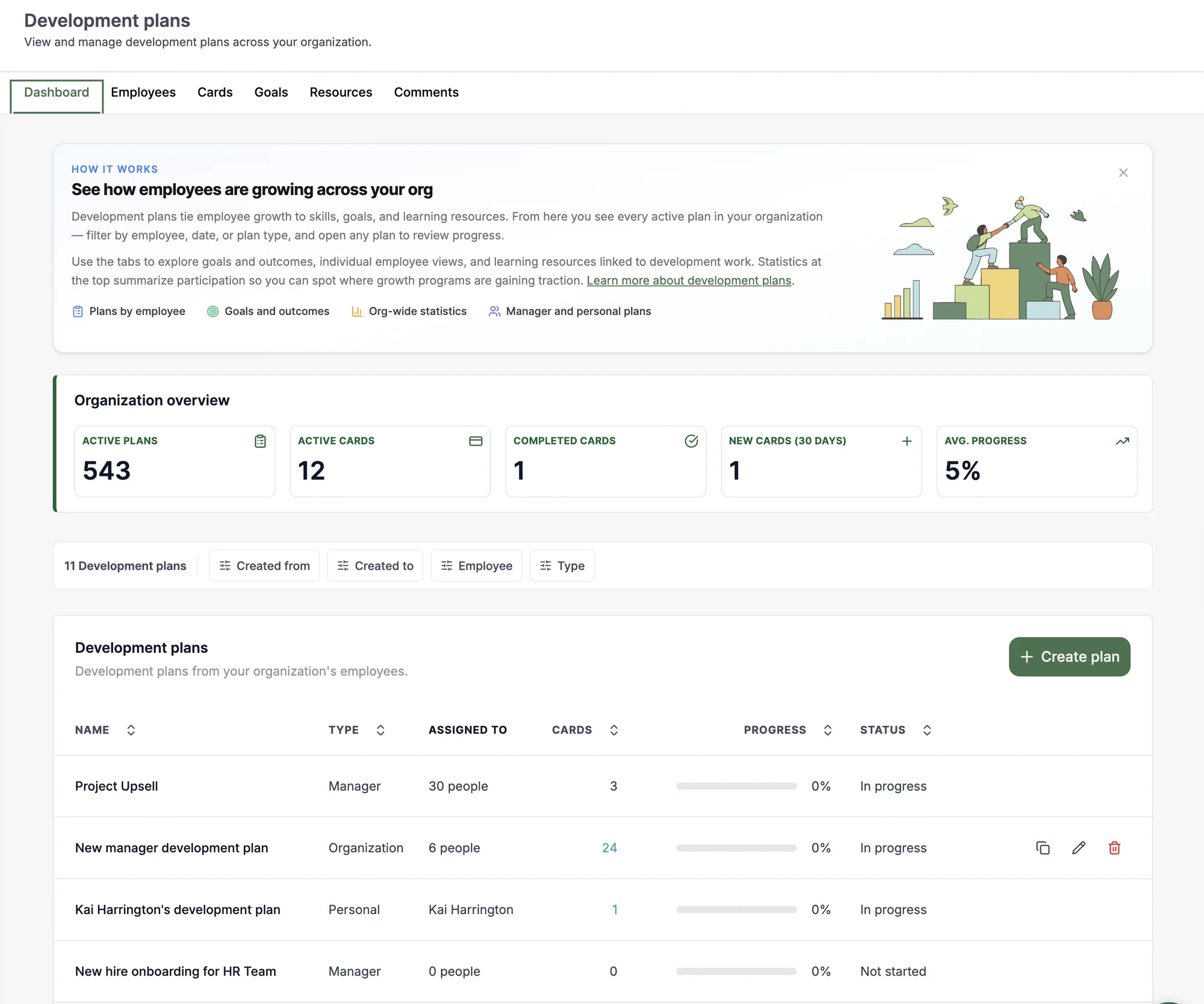
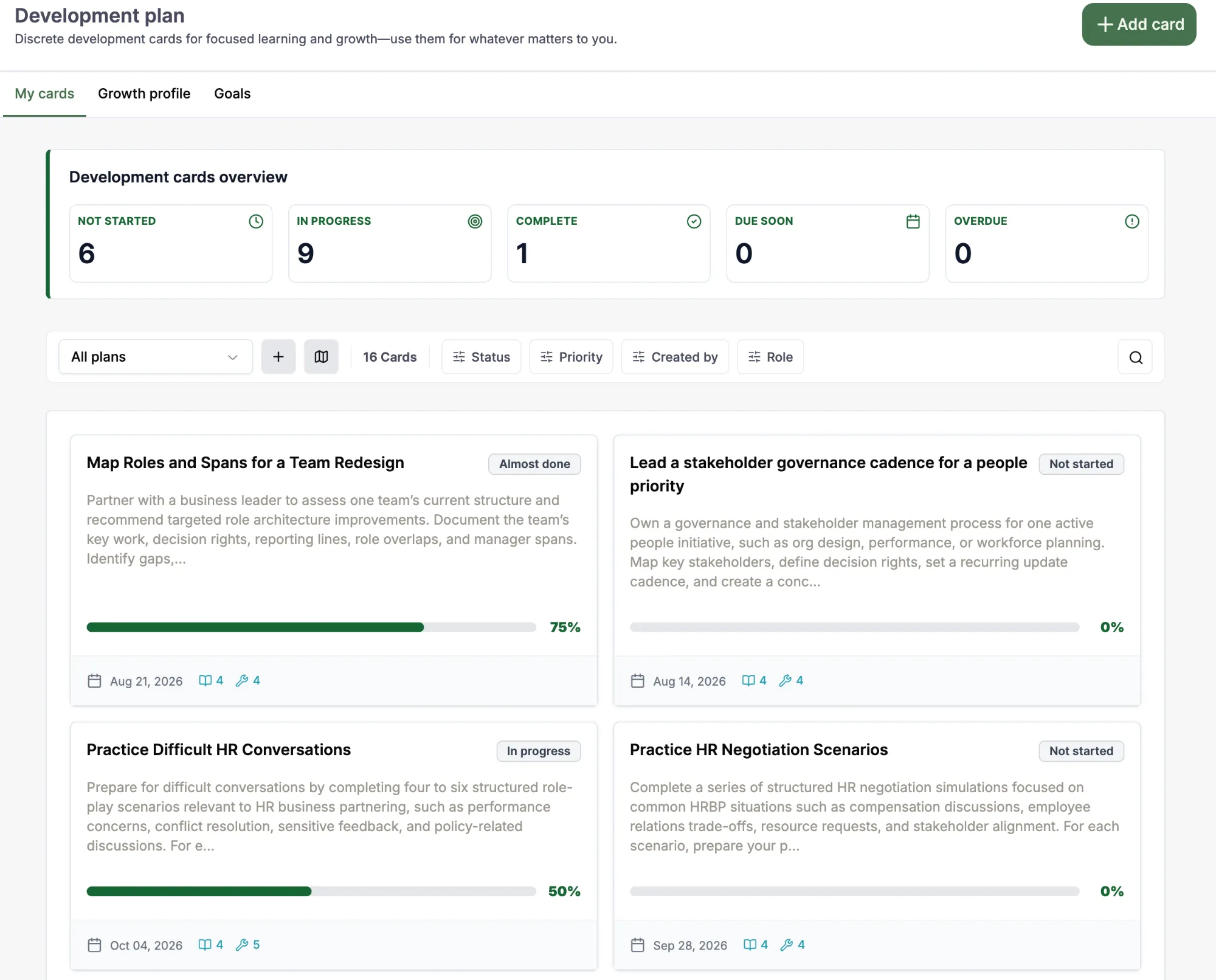
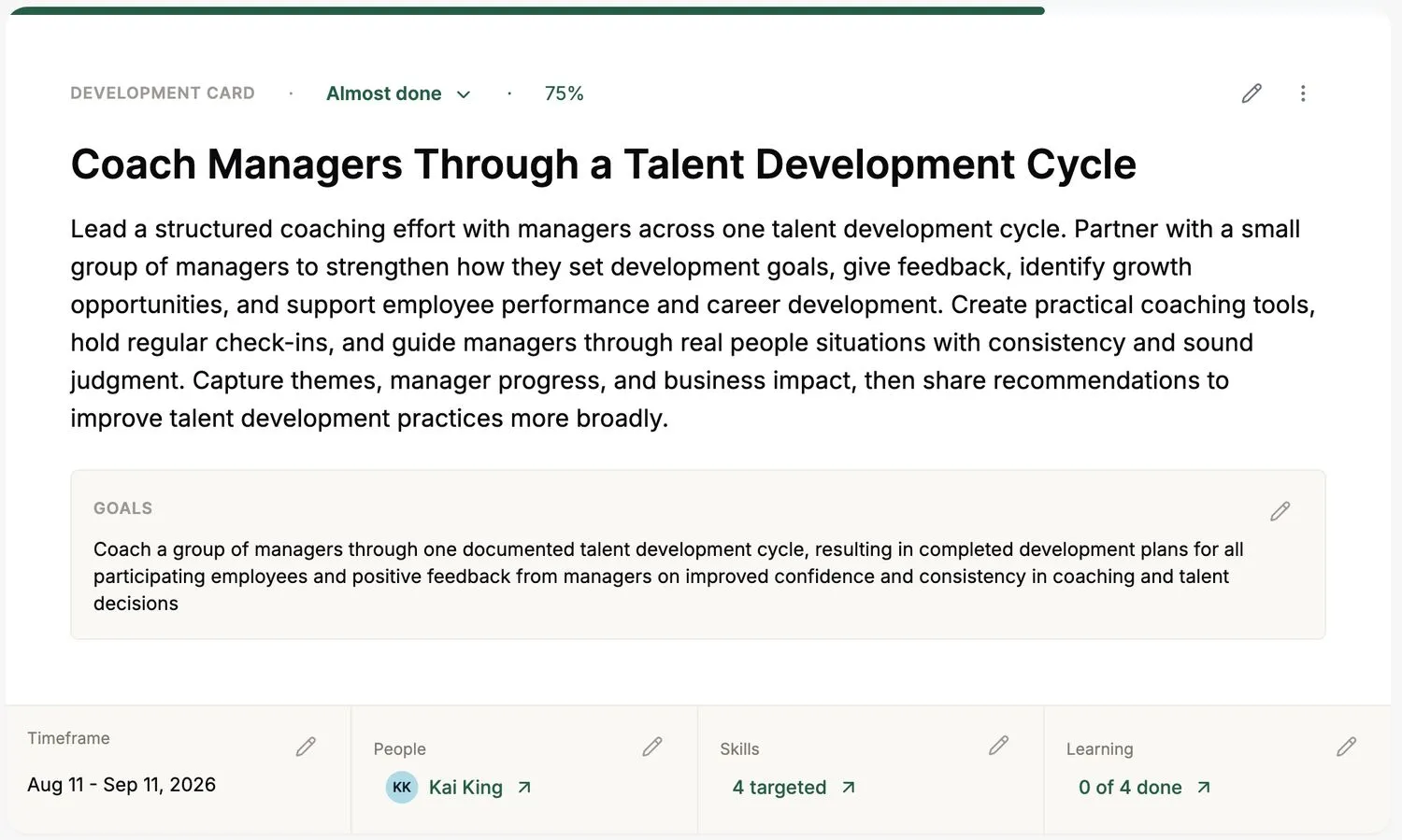
A development plan is a set of cards. Each card is one work project tied to a skill the role requires, with a goal, learning resources, a mentor and a timeframe.
Learning tied to roles and skills is where L&D sees results.
Research from LinkedIn and the World Economic Forum.
Clear, current job requirements make learning easier to target.
When every role lists its current skills and proficiency levels, learning can be matched to the job, and progress can be measured against it.
Career Bird connects the dots between job design, skills, learning, and mobility. Instead of separate systems and spreadsheets, we now have a single platform that ties everything together.
 Gail RodmanVP Talent Strategy & People Experience, Unite Us
Development plans that close each person's skill gaps
Career Bird suggests the skills, proficiency levels and demonstrated behaviors for each role. Your team customizes them, and every development plan draws on the same definitions.
Skills defined for every role
Each role lists the skills it requires and the proficiency each level needs, so learning has a clear target.
Explore Job ArchitectureGaps you can measure
Skill proficiency surveys combine self-assessment with manager calibration, and gap analysis shows where each role, team and skill category stands.
Explore Skills IntelligencePlans built around work projects
Each development plan is a set of cards. A card is one work project, mapped to a skill, a goal and learning resources, with a mentor and a deadline. Group plans cover cohorts such as new managers.
Explore Skill DevelopmentDevelopment tied to the next role
Employees compare their current role with roles they want next and turn the gap into a plan, which gives development a clear reason.
Explore Career PathingLearning aimed at the skills each role needs
Challenges talent development teams bring to us
Each page explains the problem and how Career Bird helps solve it.
Questions talent development teams ask
How does Career Bird support talent development?
Career Bird connects development to the skills each role requires. It measures proficiency with employee and manager surveys, shows the gaps, and builds development plans of work projects, mentors and learning resources aimed at those gaps.
Does Career Bird replace our LMS?
If you already run an LMS, Career Bird integrates with it and maps your existing content to the skills each role requires. If you don't have one, or you're looking to consolidate, the Skill Development module and the learning resources library often meet the need on their own.
What is in a Career Bird development plan?
A Career Bird development plan is a set of cards drawn from the skills the role requires and the employee's measured proficiency. Each card is one work project, mapped to a skill, a goal and learning resources, with a mentor who already has the skill and a deadline.
Can we run development programs for whole cohorts?
Yes. Group development plans let you assign the same plan to everyone in a role or team who shares a gap, such as new hires, new managers or a sales team.
See development plans for your own roles.
Upload a few job descriptions. Career Bird suggests the skills for each role, and your team customizes them.