Know which skills every role needs and where the skill gaps are
Career Bird identifies the skills each role requires and organizes them into a skills taxonomy. Employees self-assess and managers calibrate, for an accurate skills inventory.
A skills taxonomy built from your roles
Career Bird suggests the skills and levels. HR customizes them.






Skills data is hard to collect and keep up to date without a system.
“I’ve followed Career Bird’s evolution from the start, and it’s clear this platform was built by people who truly understand how organizations and talent grow. What stands out most is how Career Bird makes skills the common language across job design, learning, and mobility.”
 Don CarterEVP of People & Culture, Kiva
“What impressed me most is the depth. It’s not just a checklist of features — there’s a real understanding of how organizations evolve, how skills shift, and how people learn and grow in their careers.”
 Heather VeldmanVP of Total Rewards, Go Health
“You can tell Career Bird wasn’t just thrown together by software engineers. It’s clear that IO psychologists and HR leaders played a significant role in developing it — the frameworks are thoughtful, practical, and grounded in science.”
 Kira MeinzerChief People Officer, Envoy Global
“Career Bird connects the dots between job design, skills, learning, and mobility. Instead of separate systems and spreadsheets, we now have a single platform that ties everything together.”
 Gail RodmanVP Talent Strategy & People Experience, Unite Us
“So many platforms claim to be skills-focused, but Career Bird is actually built that way. It treats skills as the foundation for job design, learning, and career paths. That matters right now because AI is rewriting roles faster than most companies can respond.”
 Ted EmersonVP, Head of People
“Career Bird is one of the few HR platforms that feels like it was built for the end-user. Teams won’t need a lengthy rollout or training — it’s intuitive, clear, and something managers and employees actually want to use.”
 Maureen CalabreseFormer Chief People Officer, Sprout Social and Modern Health
“Career Bird helps companies prepare for the future by turning skills data into human growth, organizational agility, and real impact.”
 Rishad TobaccowalaFormer Chief Strategist and Growth Officer, Publicis Groupe
“Career Bird was selected to participate in the competitive PeopleTech Partners Growth Program as they are building meaningful solutions for Talent and People Leaders aligned with what’s next in work.”
 Cara Brennan AllamanoFounding Partner, PeopleTech Partners
Map skills to roles with confidence and control
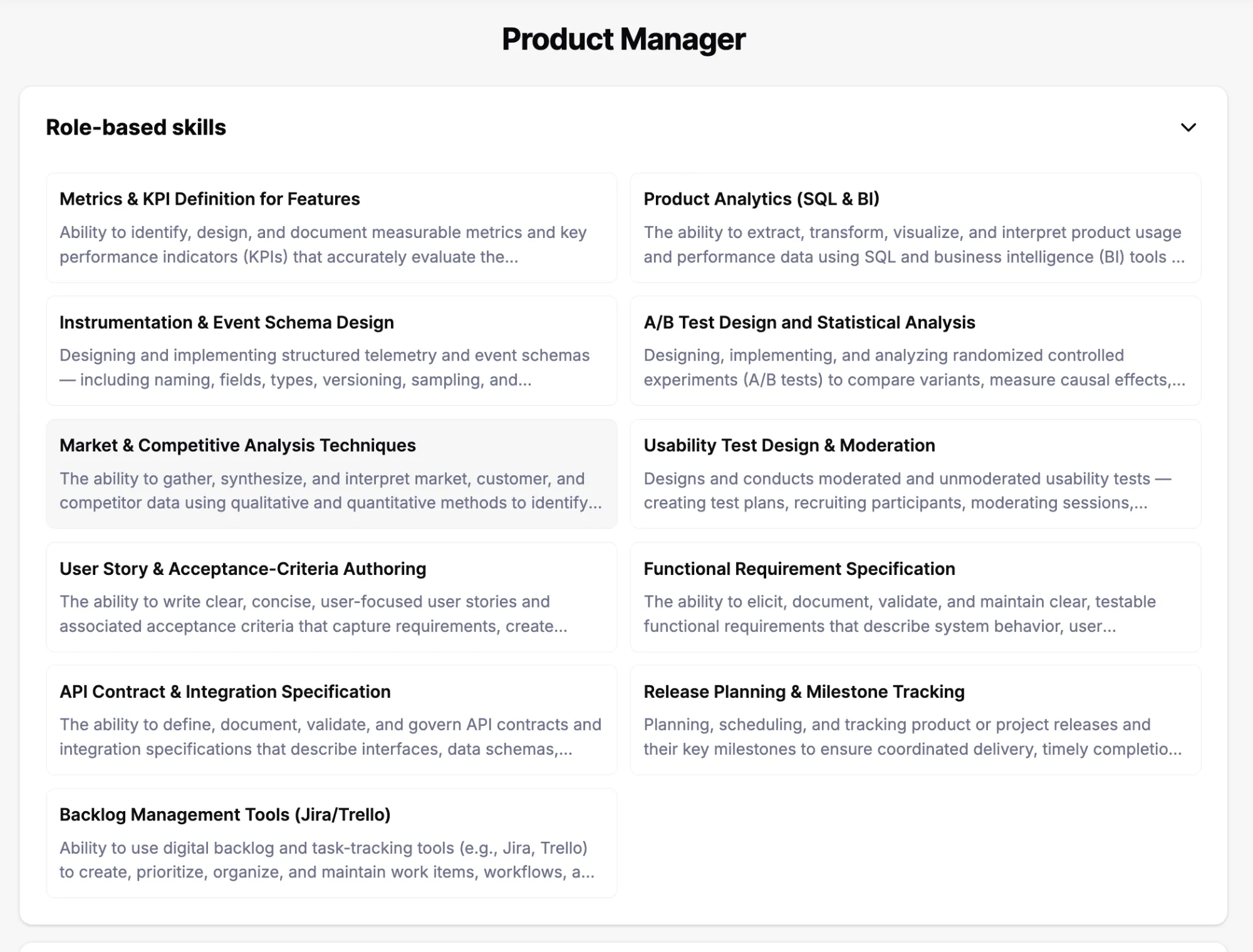
- Career Bird suggests the skills each role needs, based on its responsibilities.
- Suggestions come from the Career Bird skills library, and new skills are created when none fit.
- HR reviews and edits every skill before anything is published.
Organize skills into types and categories
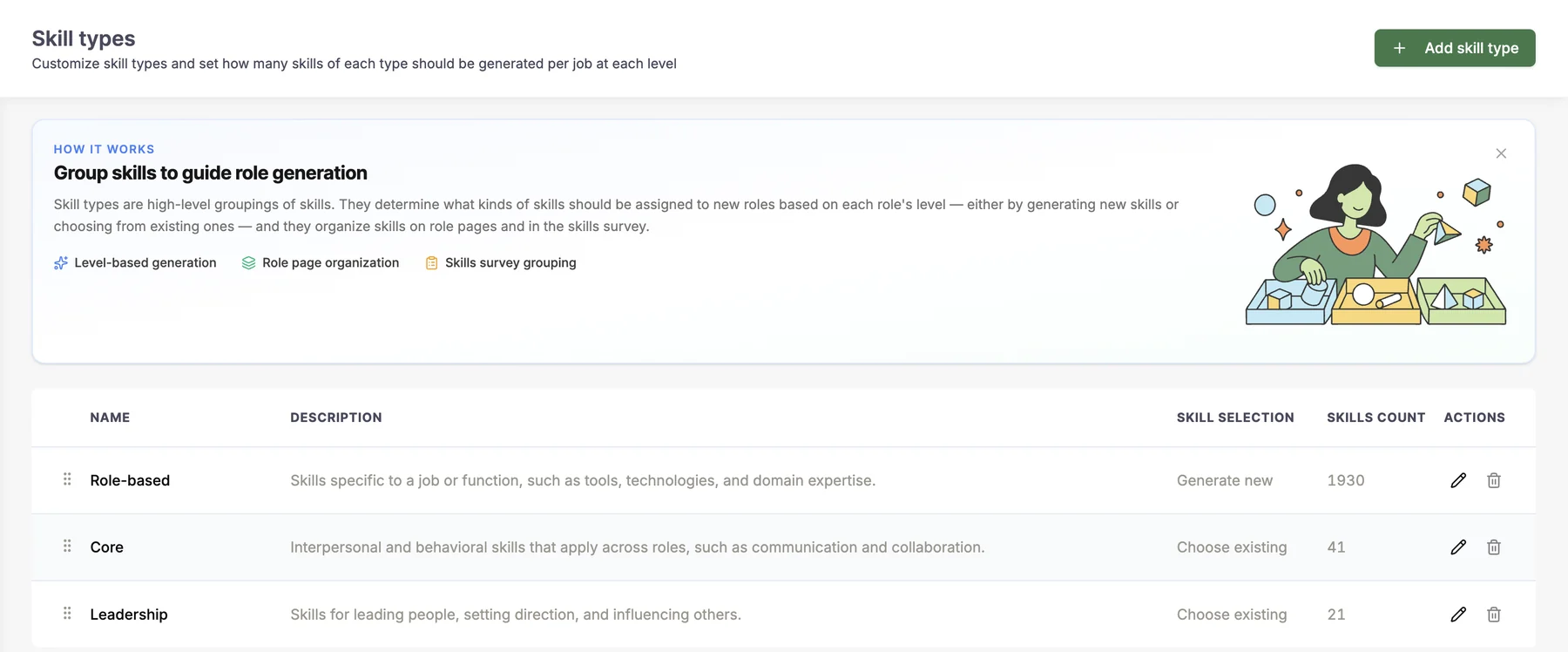
- Start with role-based, core, and leadership skill types.
- Create custom types, such as AI or people management competencies.
- Sort skills into suggested categories that HR can rename, merge or reorganize.
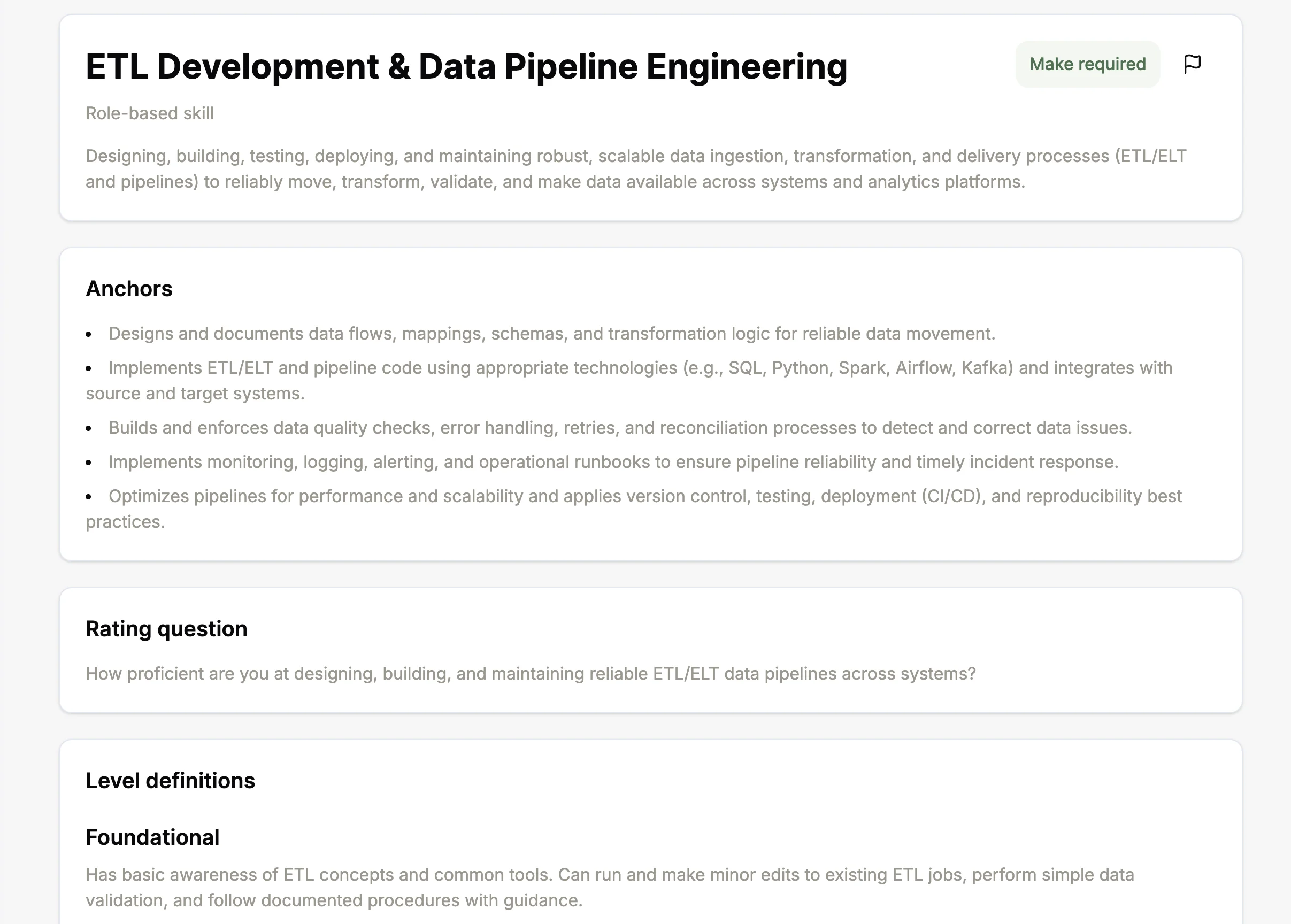
Set the proficiency each role requires
- Career Bird suggests the proficiency level for every skill at each role level.
- Four levels, from Foundational to Expert, each with a role-specific definition.
- Adjust any level or definition to fit how teams work.
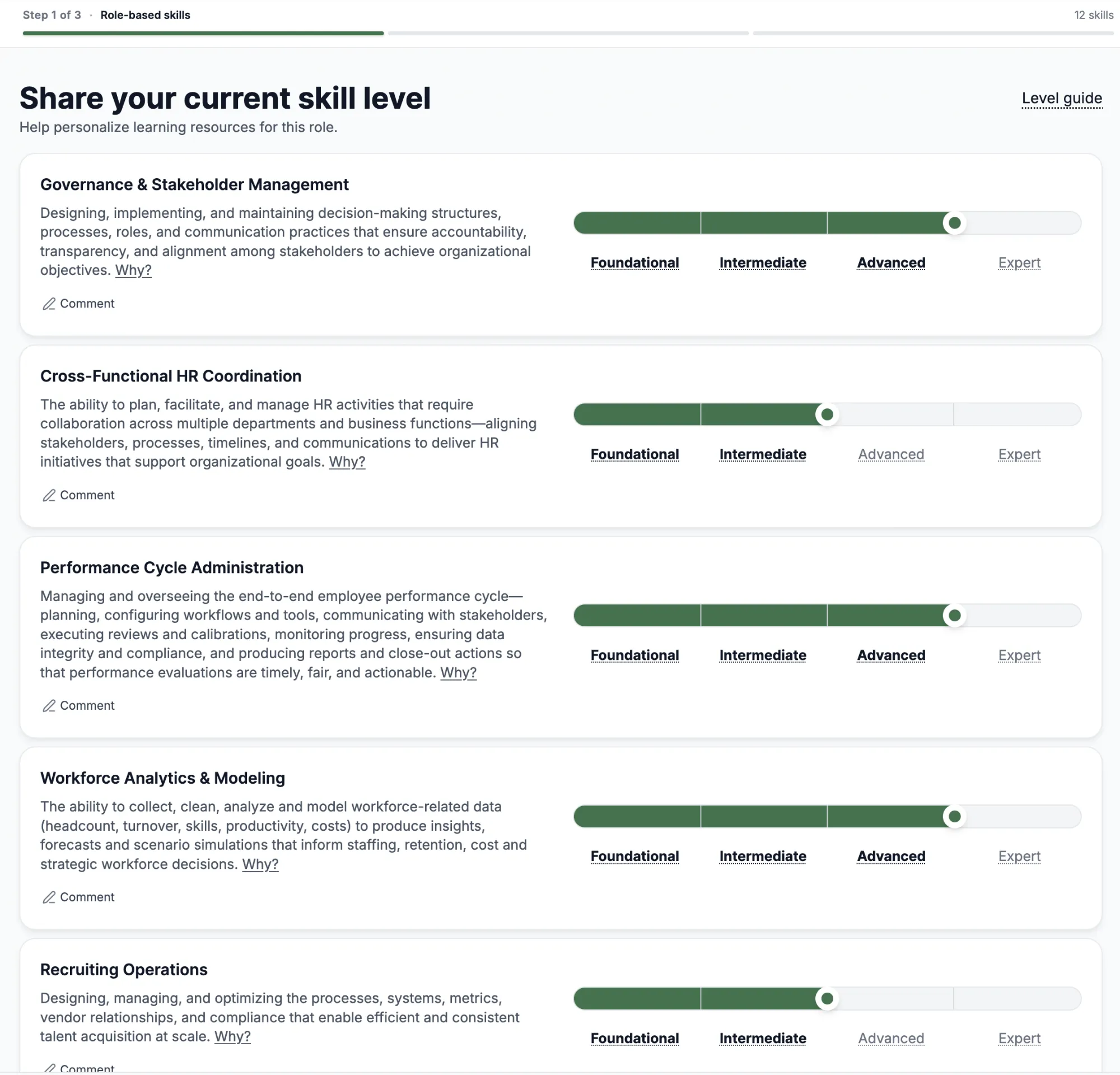
Measure proficiency, calibrated by managers
- Employees rate only the skills their role requires.
- Managers rate the same skills against the same definitions.
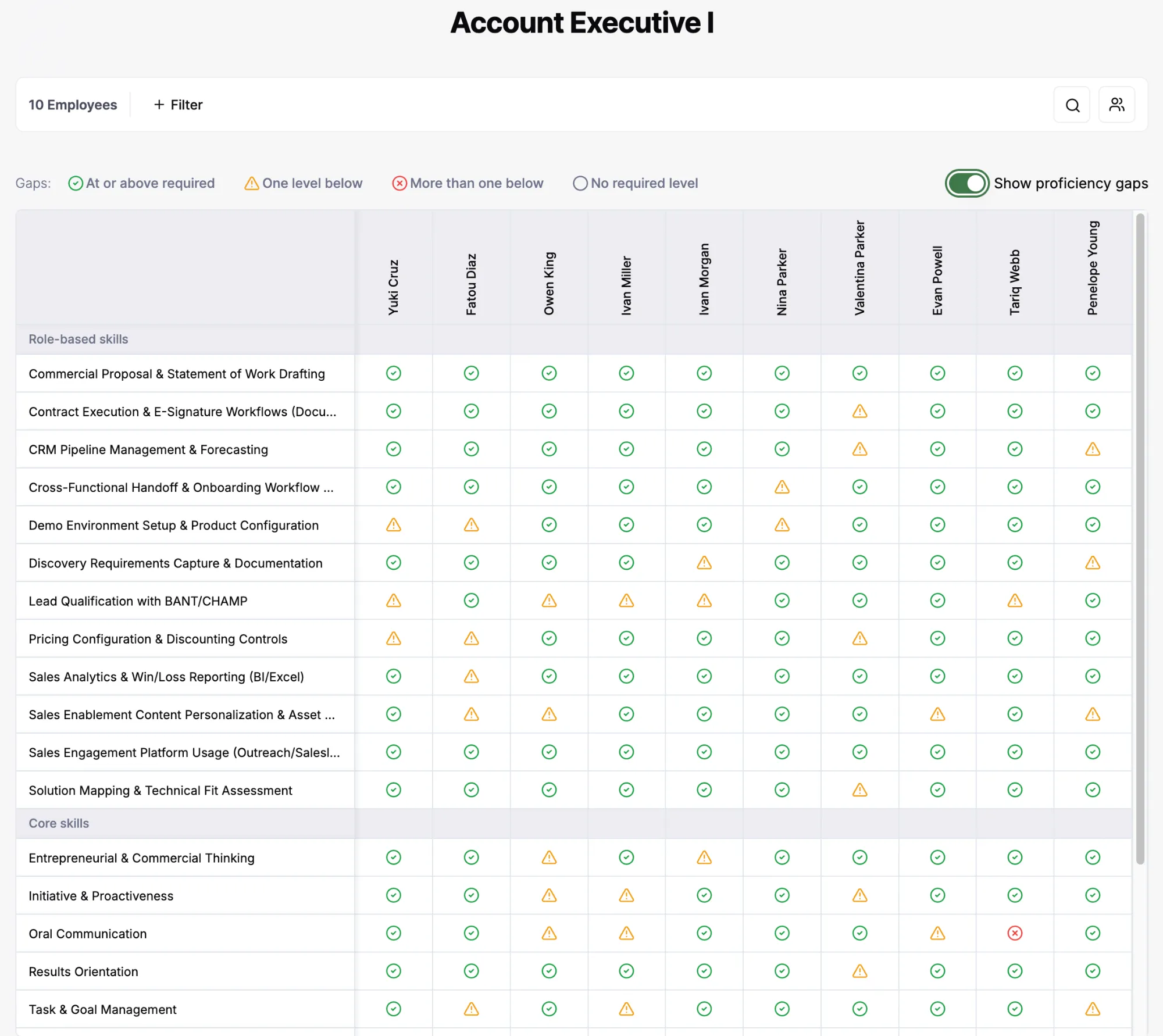
- Both views sit next to the level the role requires, so gaps are clear and development conversations start from the same facts.
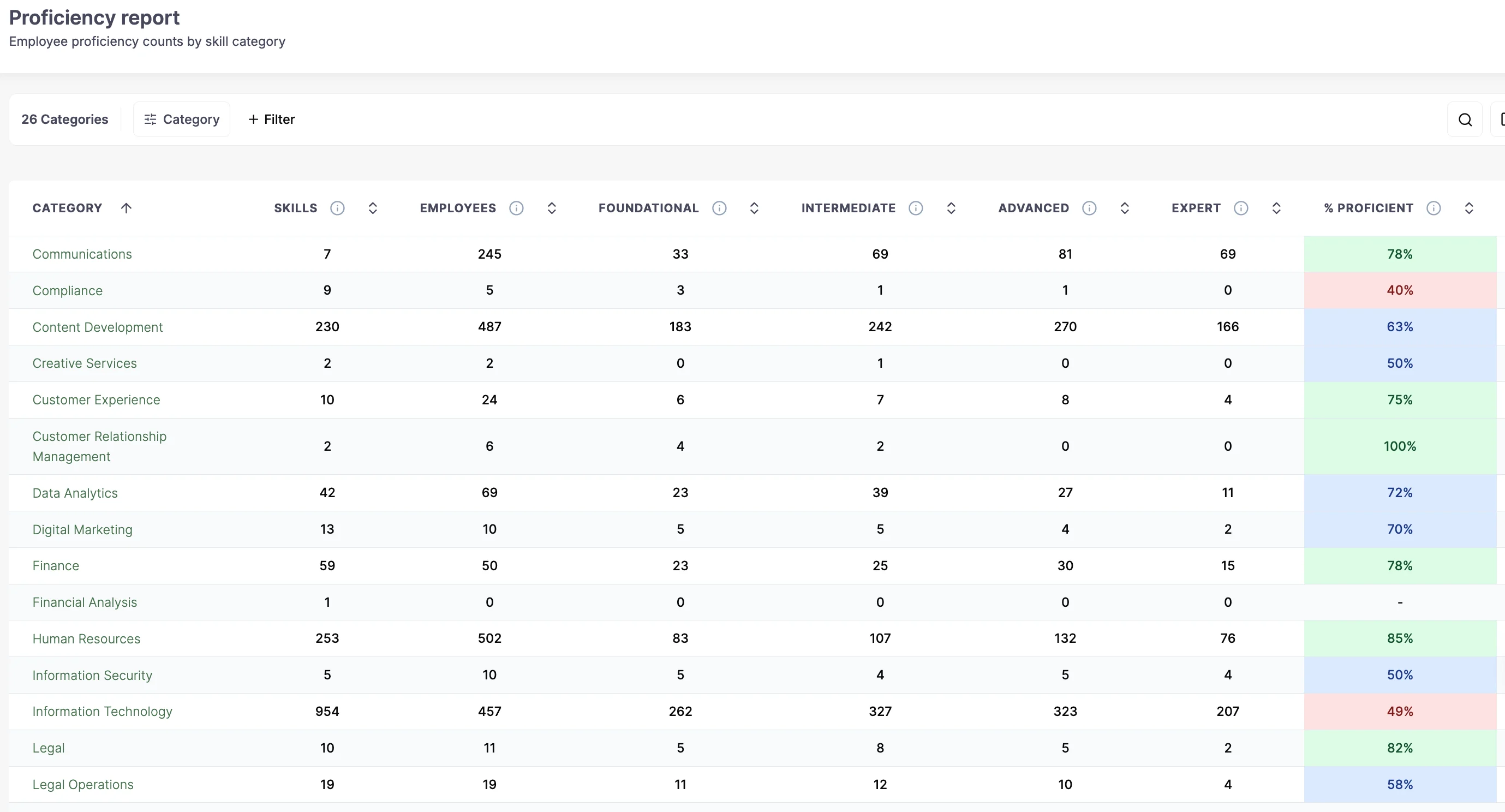
See gaps by person, team and job family
- Employees see which skills are on target and where they have room to grow.
- Managers see their whole team in one skills matrix.
- The Proficiency report shows proficiency across the organization by job family.
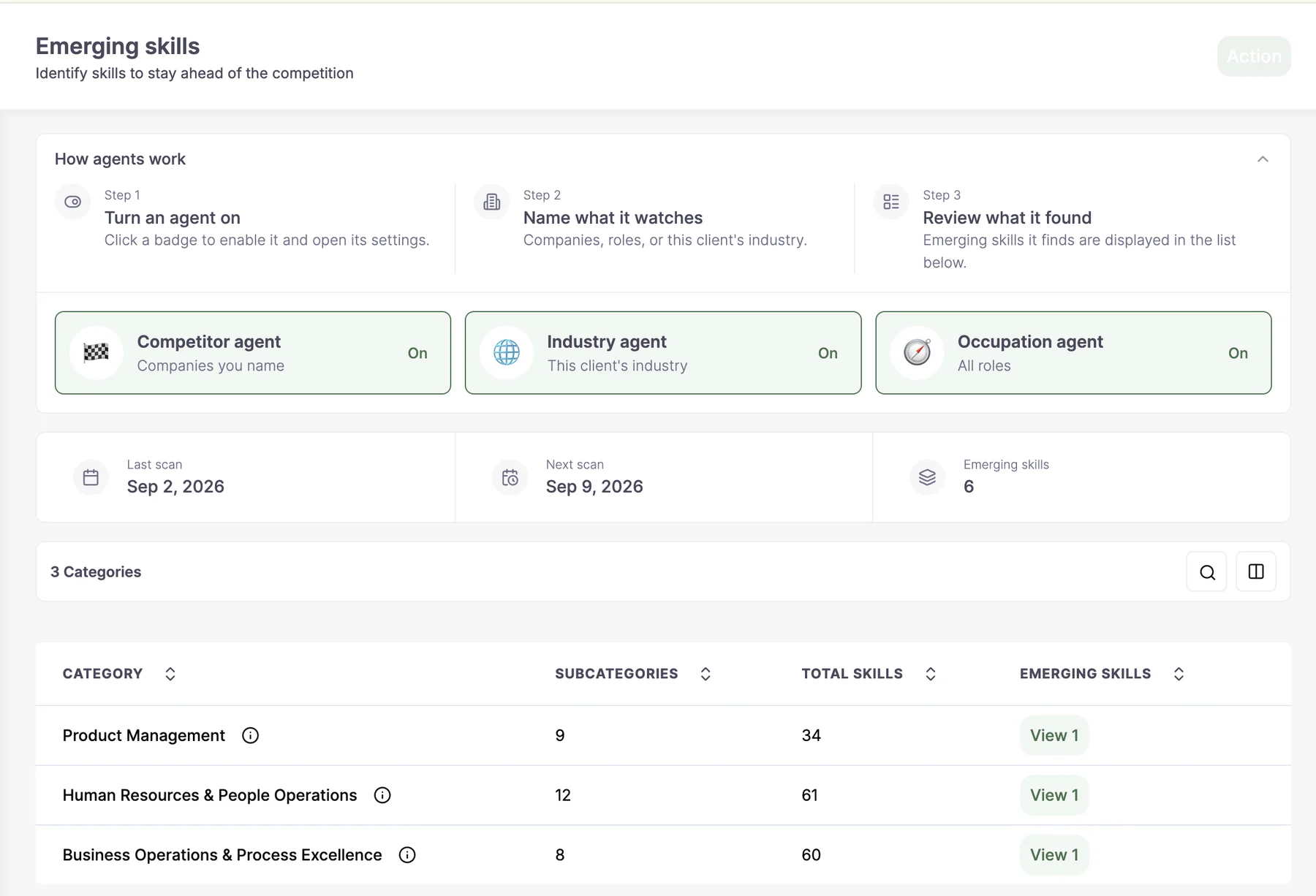
Spot emerging skills before the job postings do
- Career Bird monitors competitor job postings and industry news for emerging skills.
- It suggests the ones that matter for each role, and HR decides which to track.
- Survey, build a group development plan, then re-survey to show progress.
Skills move faster than the systems that track them.
Go deeper on Skills Intelligence

What is a skills gap?
Definition, causes, and what HR can do about it — at the individual and the workforce level.
Read more
Skills gap analysis
The framework, the failure points, and how to connect findings to real talent development.
Read more
Skills gap analysis template
Three skill categories, four proficiency levels, manager validation, and how to read the output.
Read moreFits the HR stack you already run
Career Bird pulls employee data from your HRIS and sends skills data to your LMS. Your HRIS stays the system of record for people; Career Bird for roles and skills.



 +150 more
Built for employee data
SOC 2 Type II audited, with a GDPR-aligned data processing agreement and role-based access for every user. Your data is never used to train AI models.
Questions buyers ask
How are skills mapped to roles?
Skills are suggested by Career Bird based on the responsibilities of each role, approved by HR and their delegates, and then aggregated into a single skills ontology. Each role carries the skills it requires at defined proficiency levels, so each employee's skills gap is measured against the skills required by their role.
How is current proficiency measured?
Current proficiency is measured through a survey in which employees rate themselves against the skills their role requires, and managers then rate their employees against the same scale. Every proficiency level has a skill-specific definition, so two people rating the same skill are measuring it the same way. Managers are the most important judge of proficiency, because they see the work every day. When managers review their ratings together, a given level means the same thing across teams. Career Bird makes proficiency visible and comparable across the organization.
Who decides the skill categories?
Career Bird suggests skill categories based on your industry and org structure, and your team customizes them to decide the final set. That includes what sits at the top level, how many categories there are, and what sits underneath each one. Core, leadership and AI skills roll up across functions.
How are emerging skills detected?
Career Bird detects emerging skills by monitoring competitor job postings, industry news and role-specific trends, and surfaces skills appearing where they weren't before, at the role, sub-category, category and job-family levels. Detection is a suggestion, not an automatic change. Administrators and job family editors review the emerging skills Career Bird surfaces and decide which ones to add to your company-specific skills ontology, so the ontology reflects what your organization has chosen to require rather than everything the market is talking about.
What proficiency levels do you use?
Career Bird uses four levels: Foundational, Intermediate, Advanced and Expert. Each skill shows its own definition of what every level means for that role, and your team can edit those definitions.
Can we change what Career Bird suggests?
Yes. Career Bird suggests skills, types, categories and proficiency levels, and your team can edit, add or remove any of them before they are published.
See the skills taxonomy Career Bird suggests for your roles.
Bring a few job descriptions to see the skills and proficiency levels Career Bird suggests, and how HR teams customize them.