Skills management software that keeps up as roles change
Career Bird maps skills from the responsibilities of every role, measures proficiency with manager calibration and suggests emerging skills each month as the work changes.
- ✓Skills mapped from each role’s responsibilities
- ✓Skills that are easy to customize and categorize
- ✓Proficiency calibrated with manager input
- ✓Emerging skills suggested every month






Few companies have measured data on the skills their workforce has today.
A skills matrix for every role and team
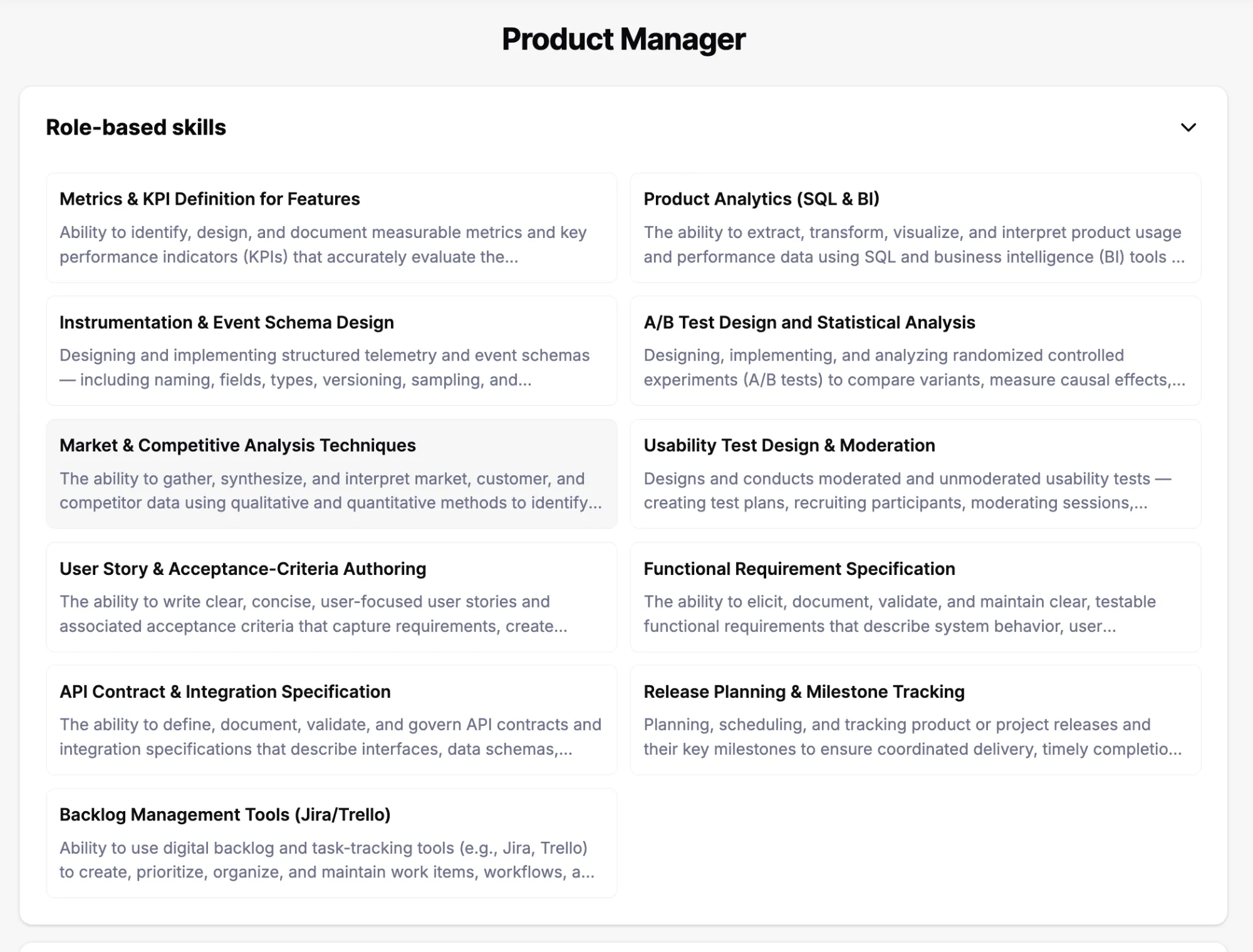
- Career Bird suggests role-based, core and leadership skills from your job descriptions, and they are easy to customize.
- Each skill has a description, proficiency levels and demonstrated behaviors.
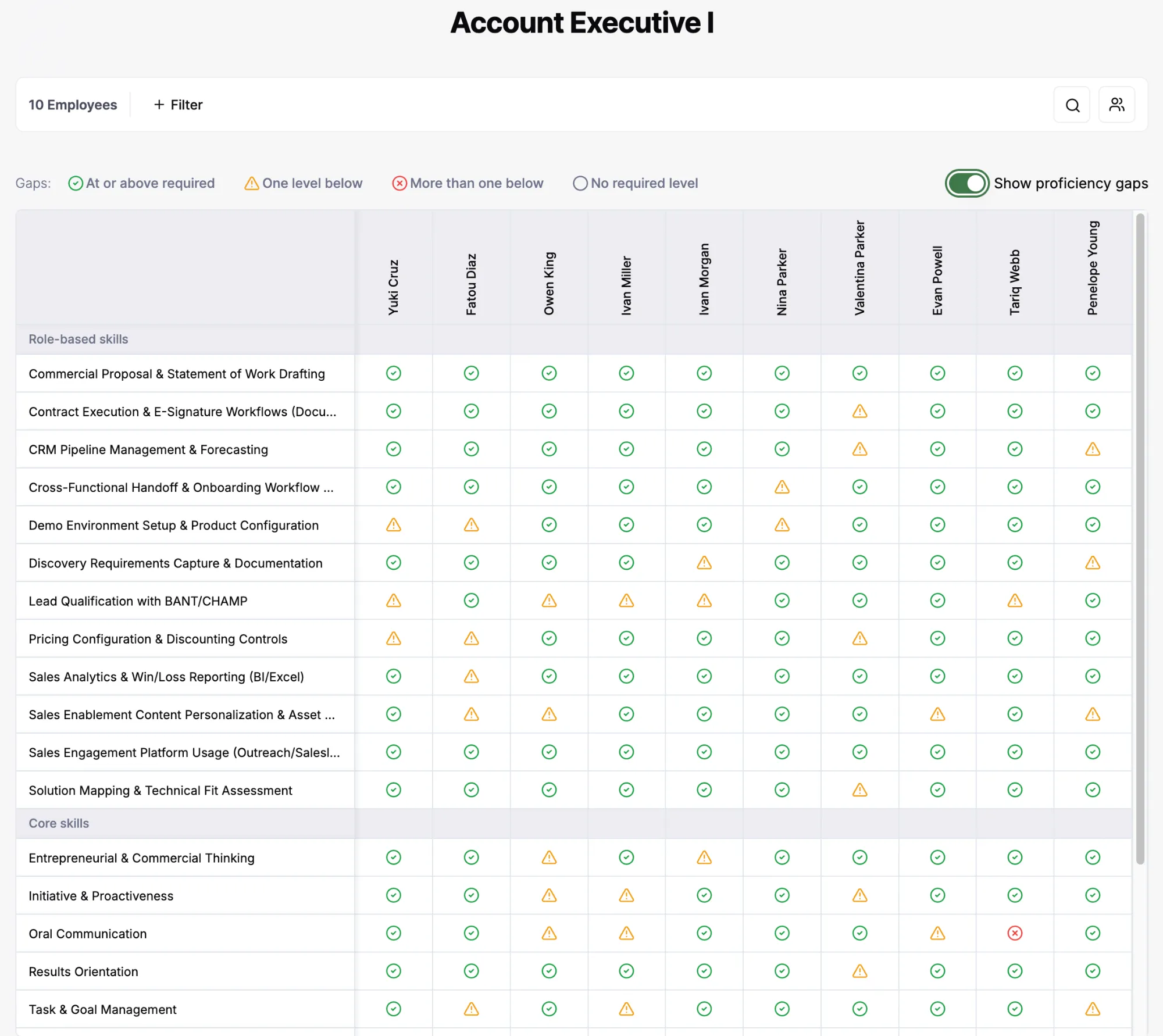
- See required and current proficiency side by side for each role and team.
Track proficiency with employee and manager surveys
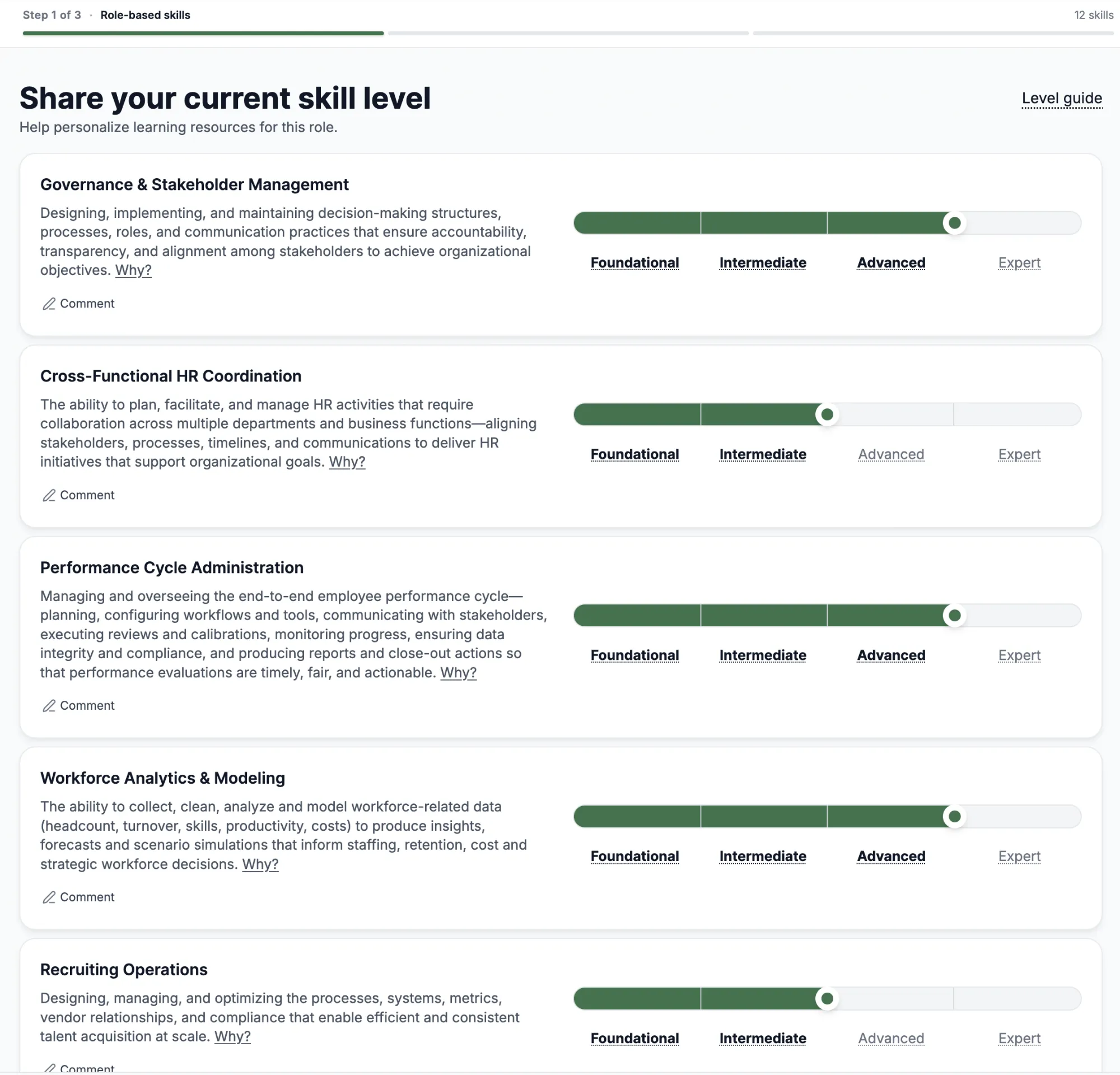
- Employees rate themselves against the skills their role requires.
- Managers calibrate each rating, so results are consistent across teams.
- Behavioral anchors make each proficiency level specific.
See skill gaps by role and team
- Compare required and current proficiency for every role.
- Spot gaps before they show up in performance or hiring.
- Gaps feed into development plans for each employee.
A skills inventory leadership can use
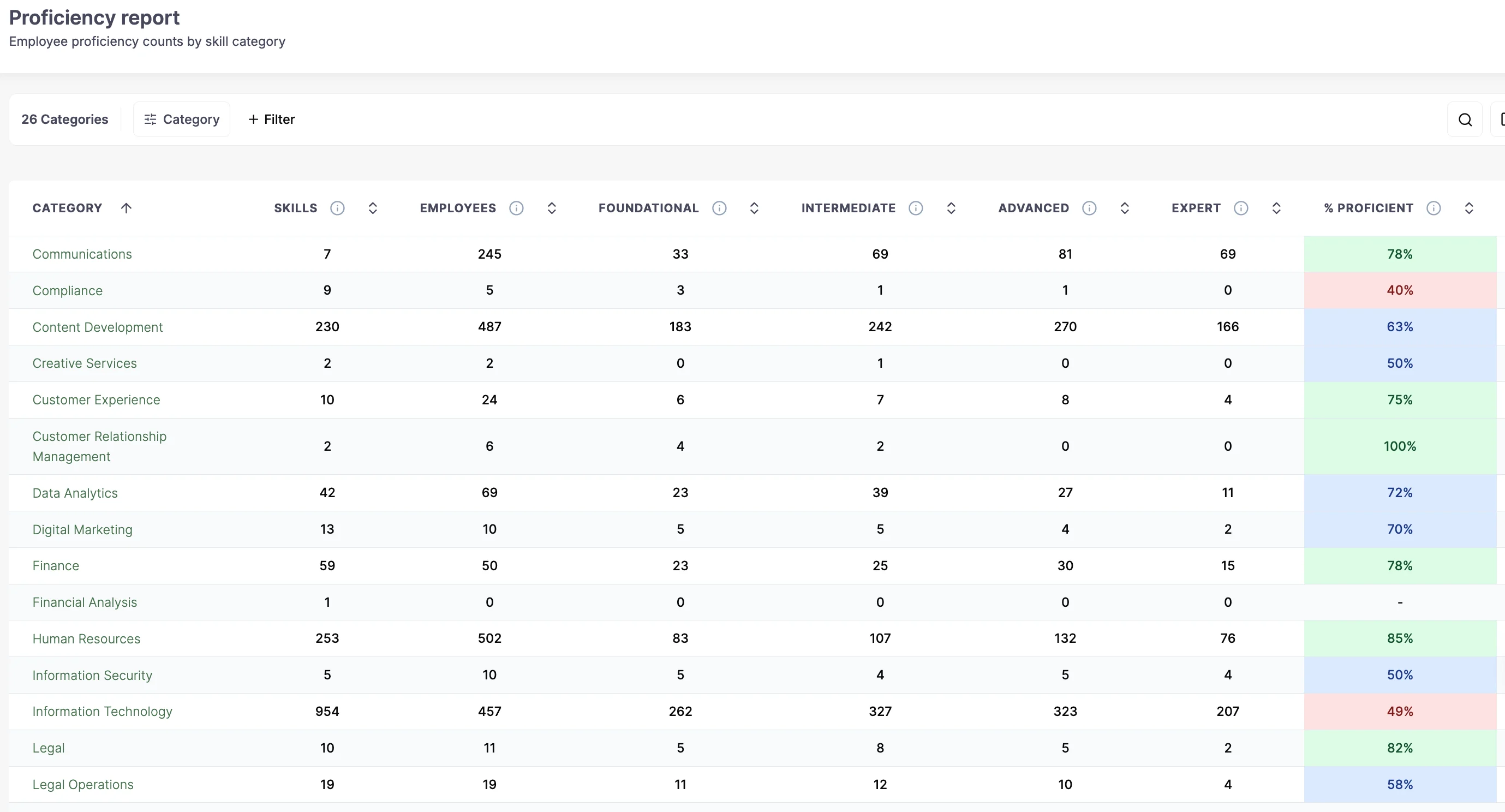
- Employee counts at each proficiency level for every skill category.
- Percent proficient for each category, from calibrated ratings.
- Answer leadership’s skills questions with measured data.
Track AI competencies and emerging skills
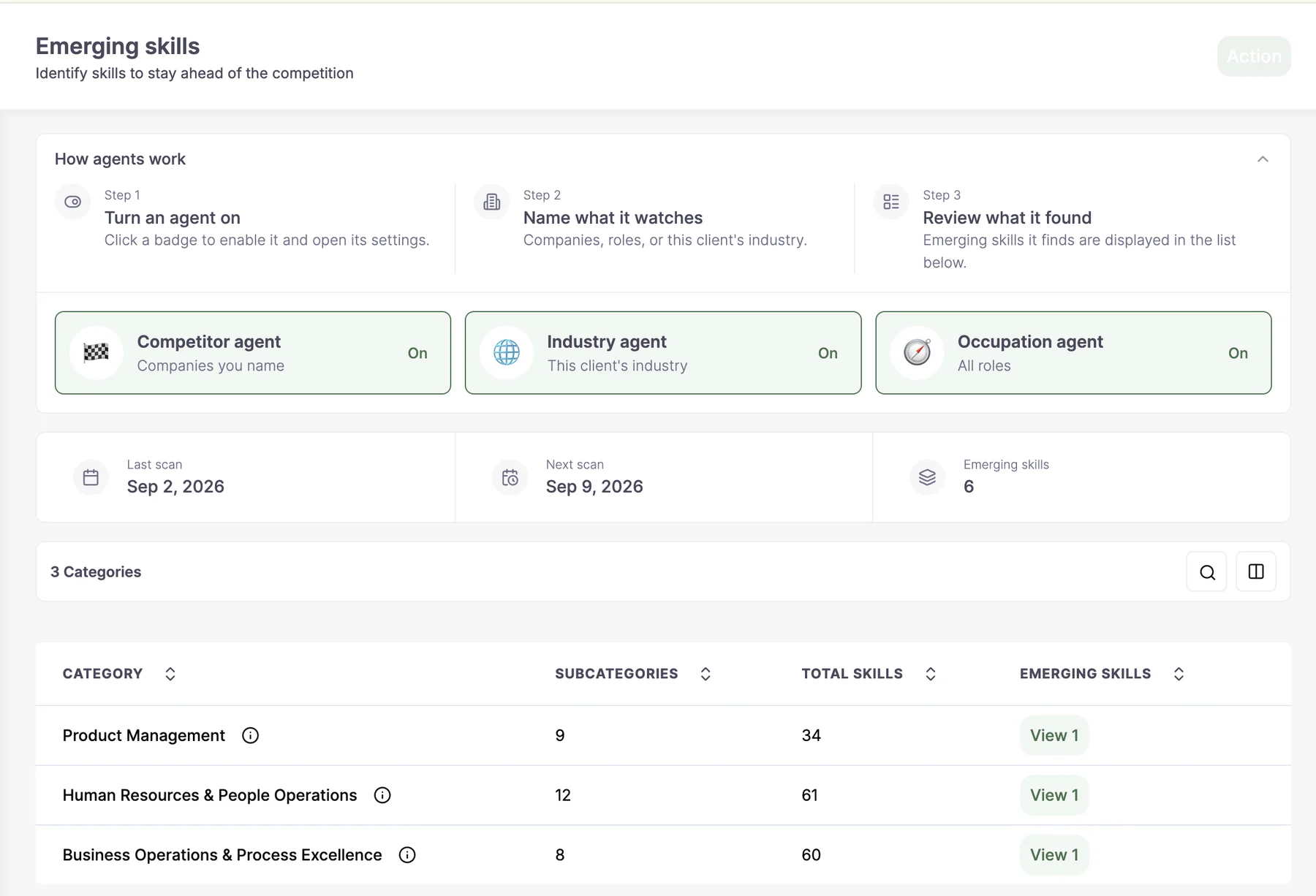
- Add AI competencies to every role as their own skill type.
- Emerging skills in your industry are suggested by category.
- Survey proficiency in them like any other skill.
Fits the HR stack you already run
Career Bird connects to your HRIS for employee data and sends job descriptions to your ATS. Your HRIS stays the system of record for people; Career Bird for roles and skills.

 +150 more
Built for employee data
SOC 2 Type II audited, with a GDPR-aligned data processing agreement and role-based access for every user. Your data is never used to train AI models.
What HR leaders say about Career Bird
Questions buyers ask
What is skills management software?
Skills management software tracks which skills each role requires and how proficient employees are in them. Career Bird suggests the skills for each role from the job descriptions a company already has, employees and managers complete a skill survey, and HR leaders see skill gaps by role, team and skill category in one skills matrix, from measured data rather than self-reported profiles.
How does Career Bird measure proficiency?
Each skill has a definition, behavioral anchors and written proficiency levels. Employees complete a self-assessment against the proficiency their role requires, and managers review and calibrate every rating, so results are consistent across teams. The ratings roll up into proficiency reports by skill category and a gap matrix that compares required and current proficiency for each role.
Does Career Bird track AI skills?
Yes. AI competencies can be added to every role as their own skill type, and emerging skills in a company’s industry are suggested by category. Proficiency in both can be surveyed like any other skill, so HR leaders can see which roles need AI skills and who has them.
How is Career Bird different from a spreadsheet skills matrix?
A spreadsheet skills matrix is built and updated by hand, and it goes out of date as roles change. In Career Bird, the skills each role requires come from the role descriptions in the job architecture, and a change to a role updates the skills measured for it. Survey results roll up into proficiency reports and gap analysis, and the same skills drive development plans and career paths.
See skills management with your own roles.
Book a demo to see the skills matrix, skill surveys and gap reports for the roles on your team.